


Band Shoulder Dislocates
A standing shoulder-mobility pass-through that arcs a light band from the thighs, overhead, and behind the body.
- Main muscle
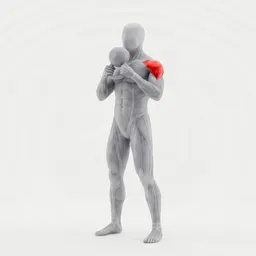
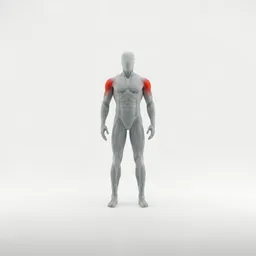
- Rotator cuff
- Also works
- Mid & lower chest
- What you need
- Bands
- Level
- Beginner
Band shoulder dislocates, also called pass-throughs, take a light band from in front of the thighs, over the head, and down behind the hips with straight arms, then reverse the path. The band can stretch, so the drill is more forgiving than a rigid PVC pipe. Deltoids and rotator-cuff muscles control the arc; the chest and lats get a stretch as the band travels behind the body.
How to do it
- 1Stand tall with the feet about shoulder-width apart and hold a light band in front of the thighs with a wide overhand grip.
- 2Brace the trunk and keep the ribs down so the lower back does not arch.
- 3Keep both arms straight and lift the band in an arc up and over the head.
- 4Continue the arc behind the body until the band reaches the lower back or the glutes, or stop at a pain-free end range.
- 5Reverse the same path back overhead and down to the thighs.
- 6Widen the grip if the elbows start to bend, and only narrow it as mobility improves.
Common mistakes
- Bending the elbows to cheat the band behind the back.
- Arching the lower back instead of moving from the shoulders.
- Using a band that is too heavy, which forces the joint instead of stretching it.
- Gripping too narrow and pushing through a painful end range.
Why do it
- Opens shoulder flexion and extension through a full overhead arc.
- The band's stretch is more joint-friendly than a rigid pipe for tight shoulders.
- Warms the rotator cuff and delts before pressing and overhead work.
Similar exercises
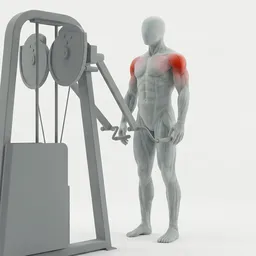
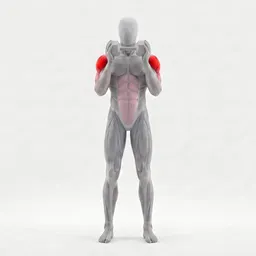
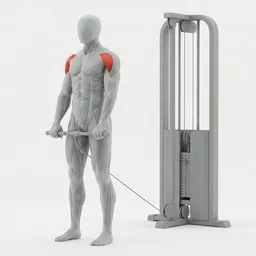
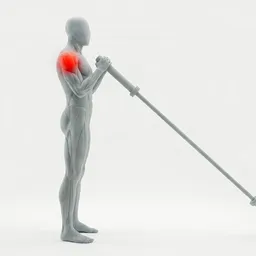
Same muscles, other equipment. Handy when your machine is taken.

Track it in Gymaroo
Log your sets, see your last weight next to every set, and watch the Band Shoulder Dislocates climb. Free on iPhone and Android.