


Belt Squat
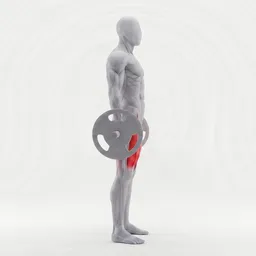
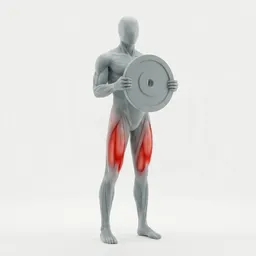
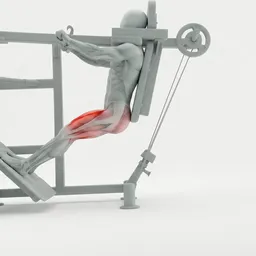
A squat loaded through a hip belt on a machine, so the weight pulls at the hips instead of sitting on the spine.
- Main muscle
- Quads
- Also works
- Glute maxHamstringsAbs
- What you need
- Machine
- Level
- Beginner
The belt squat hangs the load from a belt worn around the pelvis and attached to a machine, so the weight pulls at the hips rather than compressing the spine. You stand on the platform with the attachment point between your feet, release the safeties, and squat by lowering the hips down and back before driving back up. A kinetic analysis of isometric back squats and belt squats found higher peak forces and knee and ankle moments in the belt squat alongside lower low back moments. The quadriceps do the knee extension with the glutes and hamstrings assisting.
How to do it
- 1Fasten the hip belt around your pelvis and attach it to the machine.
- 2Stand on the platform so the attachment point sits directly between your feet.
- 3Set your feet at about shoulder width with the toes turned out slightly.
- 4Take the weight, release the safeties and hold the frame lightly for balance.
- 5Lower your hips down and back until your thighs reach roughly parallel.
- 6Drive through your whole foot to stand tall and repeat.
Common mistakes
- Standing off center so the chain pulls to one side, which twists the hips.
- Pulling on the frame with the arms, which quietly removes load from the legs.
- Loading it like a leg press, which overwhelms the belt position and cuts the range short.
- Letting the hips travel backward instead of straight down, which turns it into a hinge.
Why do it
- Loads the legs hard while keeping low back moments lower than a back squat.
- Removes the shoulder and wrist mobility demand of racking a bar.
- Lets lifters keep squatting when spinal loading has to be limited.
Similar exercises
Same muscles, other equipment. Handy when your machine is taken.




Track it in Gymaroo
Log your sets, see your last weight next to every set, and watch the Belt Squat climb. Free on iPhone and Android.