


Bodyweight Alternating Lateral Lunge
A side-to-side lunge that loads one leg at a time — builds glute and quad strength while opening up the inner thighs and hips.
- Main muscle
- Glute max
- Also works
- QuadsGlute mediusHamstringsHip flexors
- What you need
- Bodyweight
- Level
- Intermediate
The alternating lateral lunge is a frontal-plane leg exercise that most lower-body programs skip. By stepping out wide to one side and sitting back into that leg, it trains the glutes and quads through a hip pattern that forward squats and lunges never touch. It also opens up the inner thighs and improves lateral hip mobility.
How to do it
- 1Stand tall with feet hip-width apart, hands at your chest, and your core braced for balance.
- 2Take a wide step out to one side and plant the foot flat with toes pointing forward.
- 3Sit your hips back and bend the stepping leg, keeping the trailing leg straight and the chest tall.
- 4Lower until the working thigh is roughly parallel to the floor and you feel a stretch in the inner thigh.
- 5Push through the heel of the working leg to drive back up to standing in one strong motion.
- 6Repeat on the opposite side and continue alternating for the prescribed reps.
Common mistakes
- Letting the knee of the working leg cave inward instead of tracking over the foot.
- Leaning the chest too far forward, which loads the lower back instead of the glutes and quads.
- Rounding the back when sitting into the lunge instead of hinging cleanly at the hips.
- Cutting the depth short and turning a real lateral lunge into a shallow side step.
Why do it
- Builds glute and quad strength through a side-to-side hip pattern.
- Opens up the inner thighs and improves lateral hip mobility.
- Trains balance and single-leg control without weights.
Similar exercises
Same muscles, other equipment. Handy when your machine is taken.
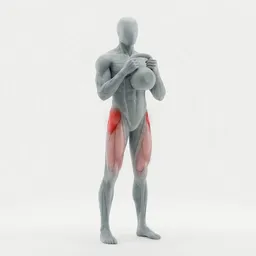
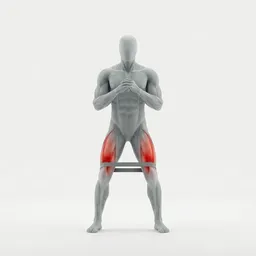

Track it in Gymaroo
Log your sets, see your last weight next to every set, and watch the Bodyweight Alternating Lateral Lunge climb. Free on iPhone and Android.