

Cable Kickback
Standing single leg hip extension against a low cable that isolates the glutes through a controlled range.
- Main muscle
- Glute max
- Also works
- Hamstrings
- What you need
- Cable
- Level
- Beginner
The cable kickback fastens an ankle cuff to a low pulley and drives one leg back behind you while the torso stays still. Because the cable pulls forward from floor level, the gluteus maximus has to finish hip extension against tension that never drops off. The hamstrings assist at the hip and the abs brace so the range comes from the hip rather than the lower back. Quadruped hip extension ranks among the highest gluteus maximus activation patterns tested, and this is the standing, cable-loaded form of that same joint action.
How to do it
- 1Attach an ankle cuff to a low pulley and fasten it around one ankle.
- 2Face the stack and hold the frame with both hands for balance.
- 3Step back until the cable is taut and shift your weight onto the standing leg.
- 4Brace your abs and keep a small bend in the standing knee.
- 5Drive the working leg back and up by squeezing the glute, keeping the hips square.
- 6Return the leg forward under control, finish the set, then swap sides.
Common mistakes
- Arching the lower back to gain range, which moves the work from the glute to the spine.
- Rotating the hips open each rep, so the leg travels further without more glute work.
- Swinging the leg with momentum, which removes tension from the glute at the top.
- Loading too heavy, so the torso leans forward and the standing leg does the stabilizing.
Why do it
- Isolates hip extension so the glutes work without the quads sharing the load.
- Cable tension stays constant through the range, unlike a bodyweight kickback.
- Trains one side at a time, which exposes side to side strength differences.
Similar exercises
Same muscles, other equipment. Handy when your machine is taken.
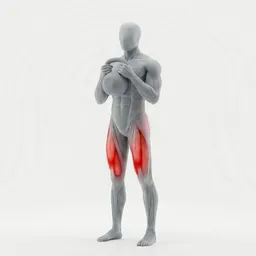
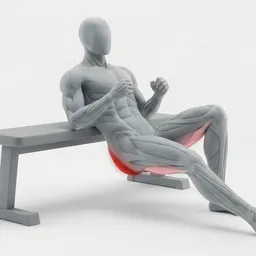
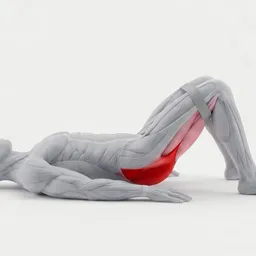
Track it in Gymaroo
Log your sets, see your last weight next to every set, and watch the Cable Kickback climb. Free on iPhone and Android.