


Dumbbell Laying Reverse Fly
A chest-down reverse fly on an incline bench that isolates the rear delts and upper back without lower-back strain.
- Main muscle
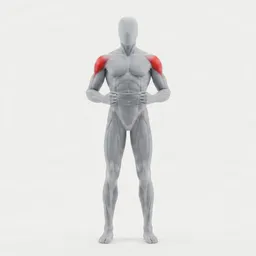
- Rear delts
- What you need
- Dumbbell
- Level
- Beginner
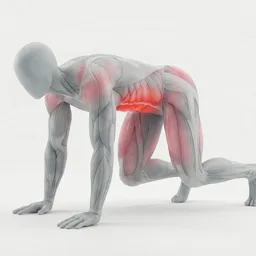
The dumbbell laying reverse fly is a reverse fly performed lying chest-down on an inclined bench. That position takes the lower back fully out of the lift and forces the rear delts and mid-back to do all the work as the arms open out to the sides — making it one of the cleanest rear-delt isolations available.
How to do it
- 1Set a bench to about a 45 degree incline and lie face-down on it with a dumbbell in each hand.
- 2Let the arms hang straight toward the floor, palms facing each other, with a slight bend in the elbows.
- 3Brace the core, plant the toes on the floor, and keep the chest supported on the bench for the set.
- 4Raise the elbows out to the sides, bending them to bring the dumbbells up beside the upper chest.
- 5Squeeze the rear delts and the middle of the back together at the top of the lift, pausing briefly.
- 6Lower the dumbbells under control over 2 to 3 seconds back to the hanging start position.
Common mistakes
- Bending and straightening the elbows mid-rep, which sneaks the triceps and traps into the lift.
- Pulling the dumbbells back like a row, swapping rear-delt isolation for mid-back rowing work.
- Shrugging the shoulders up at the top, which trades rear-delt work for trap engagement.
- Loading too heavy, which forces swinging form and removes the strict isolation the bench enforces.
Why do it
- Isolates and builds the rear delts for balanced shoulder development.
- Removes lower-back strain through the chest-supported position.
- Improves posture by strengthening the upper-back muscles that pull shoulders open.
Similar exercises
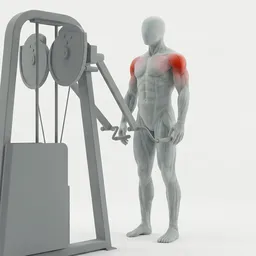
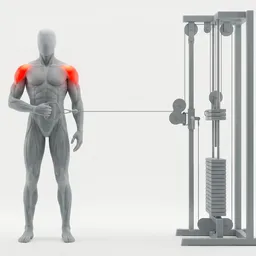
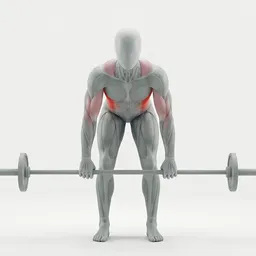
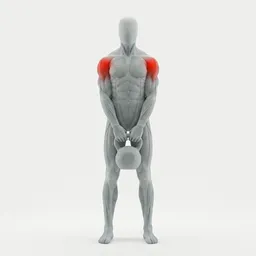
Same muscles, other equipment. Handy when your machine is taken.

Track it in Gymaroo
Log your sets, see your last weight next to every set, and watch the Dumbbell Laying Reverse Fly climb. Free on iPhone and Android.