


Dumbbell Row Bilateral
A bent-over two-dumbbell row that hammers the lats, mid-back, and biceps — the workhorse back-thickness builder.
- Main muscle
- Traps
- Also works
- Upper backBiceps
- What you need
- Dumbbell
- Level
- Beginner
The bilateral dumbbell row is a bent-over horizontal pull performed with a dumbbell in each hand. Pulling both weights to the ribs at the same time loads the lats, the mid-back, and the biceps, while the hinged position forces the lower back and core to brace hard for stability under load.
How to do it
- 1Stand with a dumbbell in each hand, feet hip-width apart, and a slight bend in the knees.
- 2Hinge at the hips until the torso is at about a 45 degree angle, keeping the back flat and the chest proud.
- 3Let both dumbbells hang straight down beneath the shoulders, palms facing each other.
- 4Pull both dumbbells up to the ribs at the same time, driving the elbows back toward the ceiling.
- 5Squeeze the shoulder blades together at the top with the dumbbells touching the lower-rib line.
- 6Lower both dumbbells under control over 2 to 3 seconds back to the fully extended hanging position.
Common mistakes
- Standing too upright, which turns the row into a high pull and removes the lat engagement.
- Rounding the lower back at the hinge, which loads the spine instead of the working muscles.
- Yanking the dumbbells up with momentum instead of pulling cleanly with the back.
- Letting the elbows flare wide, which shifts work off the lats onto the rear delts only.
Why do it
- Builds back thickness through the lats and mid-back together.
- Develops biceps strength alongside the rowing pattern.
- Reinforces hinge bracing and core stability under load.
Similar exercises
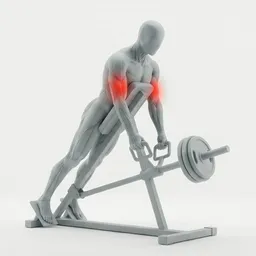
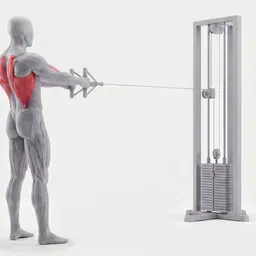
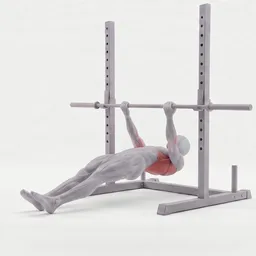
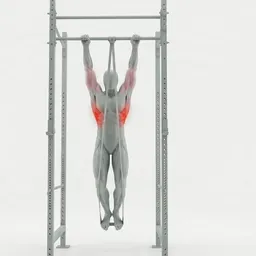
Same muscles, other equipment. Handy when your machine is taken.



Track it in Gymaroo
Log your sets, see your last weight next to every set, and watch the Dumbbell Row Bilateral climb. Free on iPhone and Android.