


Dumbbell Windmill
Overhead hinge that keeps one dumbbell stacked while the free hand reaches down the outer edge of the leg.
- Main muscle
- Side delts
- Also works
- ObliquesFront deltsGlute mediusHamstrings
- What you need
- Dumbbell
- Level
- Intermediate
The windmill holds a load overhead and moves the body underneath it. The pattern is a hip hinge with a slight torso rotation, the free hand tracking the outer edge of the opposite leg, and a return driven by the glute on the loaded side. The overhead shoulder stays stacked; the obliques and abdominals resist collapse; the glutes and hamstrings take the stretch and the stand. A dumbbell can stand in for a kettlebell on the same overhead hinge.
How to do it
- 1Stand with the feet apart and one dumbbell locked out overhead in a straight arm.
- 2Turn both feet slightly away from the loaded side and pack the overhead shoulder.
- 3Push the hip on the loaded side back and let the free hand slide down the outer edge of the near leg.
- 4Hinge and rotate only as far as the overhead arm stays stacked and the spine stays long.
- 5Drive the hip forward to stand while the dumbbell stays over the shoulder.
- 6Reset the feet and switch sides after the set.
Common mistakes
- Squatting the knees instead of hinging the loaded hip back.
- Collapsing into a side bend and losing the overhead stack.
- Letting the dumbbell drift in front of or behind the shoulder.
- Forcing the free hand to the floor past available hamstring range.
Why do it
- Trains overhead shoulder stability while the hips and trunk move underneath the load.
- Opens the hamstrings and glutes in a loaded hinge that is not a deadlift.
Similar exercises
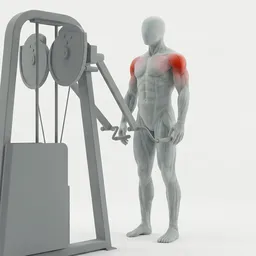
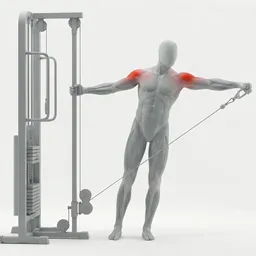
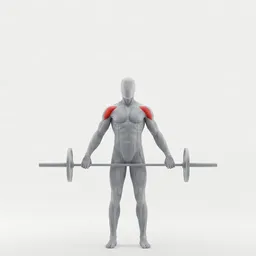
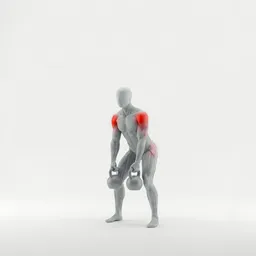
Same muscles, other equipment. Handy when your machine is taken.

Track it in Gymaroo
Log your sets, see your last weight next to every set, and watch the Dumbbell Windmill climb. Free on iPhone and Android.