


Glute Bridge
A supine hip extension driven by the glutes, lifting the hips to a straight line from knees to shoulders.
- Main muscle
- Glute max
- Also works
- Hamstrings
- What you need
- Bodyweight
- Level
- Beginner
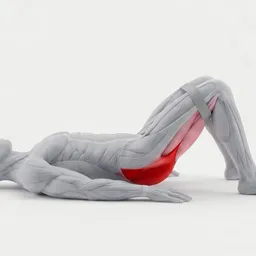
The glute bridge starts lying on your back with the knees bent and the feet flat. You brace the trunk, press the heels down and lift the hips until knees, hips and shoulders form a straight line, then lower under control. The gluteus maximus produces the hip extension, the hamstrings assist and the abdominals stop the movement turning into a lumbar arch. The hips should stop at that straight line rather than traveling higher, because the extra range comes from the lower back and not from the glutes.
How to do it
- 1Lie on your back with your knees bent and feet flat, hip-width apart.
- 2Set your arms close alongside your torso with the palms down.
- 3Draw your ribs down and flatten your lower back into the floor.
- 4Press through your heels and lift the hips by squeezing the glutes.
- 5Stop when knees, hips and shoulders line up, then hold briefly.
- 6Lower the hips back to the floor under control and repeat.
Common mistakes
- Pushing the hips past a straight line, which arches the lower back instead of loading the glutes.
- Driving through the toes, which pulls the hamstrings in and makes them cramp.
- Setting the feet too far from the hips, so the hamstrings take over from the glutes.
- Rushing the lowering phase, which removes most of the time the glutes spend under tension.
Why do it
- Loads hip extension with no equipment and almost no skill requirement.
- Teaches the pelvic control that transfers to hinges, squats and hip thrusts.
- Scales easily to single-leg, banded and externally loaded versions.
Similar exercises
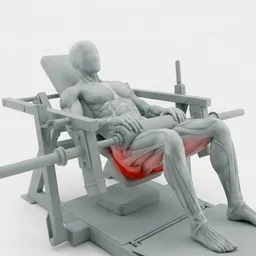
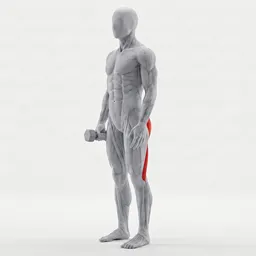
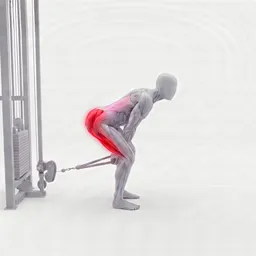
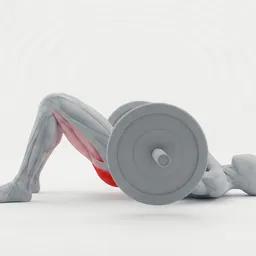
Same muscles, other equipment. Handy when your machine is taken.

Track it in Gymaroo
Log your sets, see your last weight next to every set, and watch the Glute Bridge climb. Free on iPhone and Android.