


Hand Plank
A high plank held on straight arms — a foundational isometric for the abs, shoulders, and full-body bracing.
- Main muscle
- Abs
- Also works
- Lower backObliques
- What you need
- BodyweightDone for time
- Level
- Beginner
The hand plank is the most common isometric core hold in fitness. Held on straight arms with the body forming a long line from heels to head, it trains the abs to resist sagging while the shoulders and serratus stabilize the upper body. It's deceptively simple, which is exactly why it shows up in nearly every program.
How to do it
- 1Start on all fours with your hands flat on the floor directly under your shoulders.
- 2Step both feet back one at a time until your legs are straight and your body is in a long line.
- 3Press the floor away to spread your shoulder blades and keep a slight rounding through the upper back.
- 4Squeeze your glutes and brace your abs to stop your hips from sagging or piking up.
- 5Hold the position with steady breathing, eyes looking down between your hands to keep a neutral neck.
- 6Lower your knees back to the floor with control after the target time and rest before the next set.
Common mistakes
- Letting the hips sag toward the floor, which loads the lower back instead of the abs.
- Piking the hips up high, which turns the plank into a partial downward dog and removes the core challenge.
- Letting the head drop or crane forward, which strains the neck and breaks the body's straight line.
- Locking the elbows and sinking into the shoulders instead of pressing the floor away.
Why do it
- Builds full-core endurance and anti-extension strength.
- Stabilizes the shoulders for pressing and overhead work.
- Reinforces full-body bracing under your own bodyweight.
Similar exercises
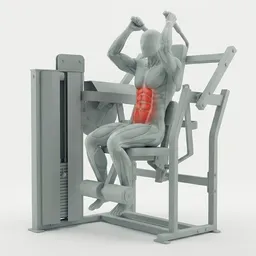
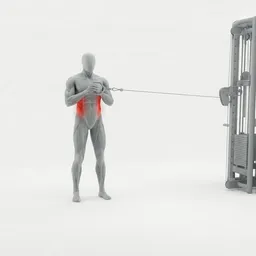
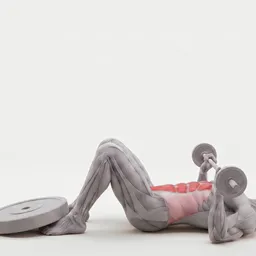
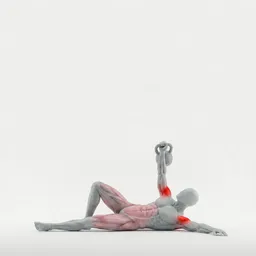
Same muscles, other equipment. Handy when your machine is taken.


Track it in Gymaroo
Log your sets, see your last weight next to every set, and watch the Hand Plank climb. Free on iPhone and Android.