


Hip Hinge Drill
A standing pattern drill that sends the hips back with a long spine, shown here with hands on the hips and no load.
- Main muscle
- Glute max
- Also works
- HamstringsLower back
- What you need
- Bodyweight
- Level
- Beginner
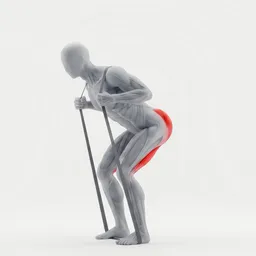
The hip hinge drill teaches the posterior-chain pattern used in deadlifts, swings, and everyday lifting: hips travel back, the torso tips as a unit, and the spine stays long. In this video the mannequin stands in side profile with both hands on the hips and nothing in the hands. That is the unloaded coaching version used to feel hip travel before a dowel or bar is added. The glutes drive the return to standing; the hamstrings lengthen on the way down and the spinal erectors hold the torso quiet.
How to do it
- 1Stand tall with the feet about hip width and both hands resting on the hips.
- 2Soften the knees and brace the trunk so the spine stays long.
- 3Push the hips straight back and let the torso tip forward as one piece.
- 4Stop when the torso is nearly parallel to the floor or the hamstrings pull.
- 5Drive the hips forward and stand tall by squeezing the glutes.
- 6Repeat slow hinges without rounding the low back or turning the move into a squat.
Common mistakes
- Bending through the low back instead of sending the hips back.
- Squatting the knees forward so the shins travel and the hinge is lost.
- Letting the chest collapse or the neck poke as the torso tips.
- Rushing the stand-up without squeezing the glutes to finish tall.
Why do it
- Teaches a hip-dominant pattern that loaded deadlifts and swings depend on.
- Builds posterior-chain awareness with no equipment and little space.
- Gives coaches a clear screen for spine position before they add load.
Similar exercises
Same muscles, other equipment. Handy when your machine is taken.

Track it in Gymaroo
Log your sets, see your last weight next to every set, and watch the Hip Hinge Drill climb. Free on iPhone and Android.