


Bounds
An alternating-leg horizontal bound: an exaggerated running stride that covers distance with a long, springy flight.
- Main muscle
- Quads
- Also works
- Glute maxHamstringsGastrocnemius
- What you need
- Bodyweight
- Level
- Intermediate
Bounds are a plyometric running drill. Each takeoff is a single-leg push that sends the body forward and up, then the opposite leg lands and immediately bounds again. The stride is longer and stiffer than a jog, with a visible flight phase, so the quads, glutes, hamstrings, and calves all contribute to the spring. Plyometrics are short, intense bursts that target fast-twitch fibers for speed and jump power, and alternating bounding sits among track-and-field plyometric drills.
How to do it
- 1Stand tall with the feet side by side, about hip-width apart, and the arms relaxed.
- 2Lean forward a little and load the lead leg without sitting into a deep squat.
- 3Drive that leg into the floor and bound forward, cycling the other knee through.
- 4Land on the opposite foot on the ball of the foot, then bound again immediately.
- 5Keep the torso upright and the legs relatively long rather than tucking into a hop.
- 6Continue alternating legs for the desired distance or number of contacts.
Common mistakes
- Sitting into a deep squat on each takeoff, which turns the bound into a jump squat.
- Landing stiff-legged with a locked knee, which dumps the impact into the joint.
- Letting the hips twist so each bound becomes a shuffle instead of a straight stride.
- Pausing on every landing instead of using the landing as the next takeoff.
Why do it
- Trains horizontal spring and stride power that transfers to sprinting and jumping.
- Uses only bodyweight, so it fits field and studio plyometric blocks.
- Bridges a two-foot broad jump and actual running without adding a box.
Similar exercises
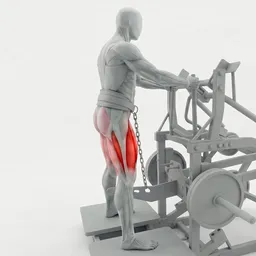
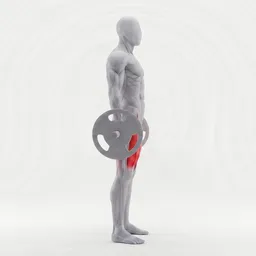
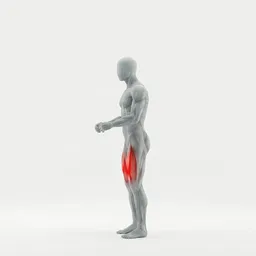
Same muscles, other equipment. Handy when your machine is taken.




Track it in Gymaroo
Log your sets, see your last weight next to every set, and watch the Bounds climb. Free on iPhone and Android.