


Dumbbell Step-Up (Low)
A single leg step onto a low box while holding a dumbbell in each hand, driven by the top leg.
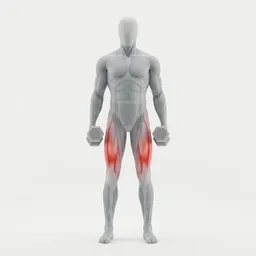
- Main muscle
- Quads
- Also works
- Glute maxHamstringsGastrocnemiusAbs
- What you need
- Dumbbell
- Level
- Beginner
The low dumbbell step-up trains one leg at a time through a step height that most people can control. You stand facing a low box with a dumbbell in each hand, place one foot flat on the surface, then press through that heel until the leg is fully extended and the trailing foot joins it. The quadriceps and gluteus maximus produce the movement, and driving through the heel rather than the toes keeps the glutes involved. A low box keeps the hip angle shallow, which makes it accessible to people who cannot yet control a knee height step.
How to do it
- 1Hold a dumbbell in each hand with your arms straight at your sides.
- 2Stand facing a low, stable box with your feet hip width apart.
- 3Pull your shoulders down and back and brace your abdominals.
- 4Place one foot flat on the box with the knee tracking over the second toe.
- 5Press through that heel to stand tall on the box and bring the other foot up.
- 6Step back down with the trailing foot, keeping the working foot planted on the box, and repeat.
Common mistakes
- Pushing off the back foot to get up, which takes the work off the stepping leg.
- Driving through the toes instead of the heel, which reduces glute involvement.
- Letting the stepping knee fall inward as you rise, which stresses the joint.
- Dropping down instead of lowering, which throws away the eccentric half of the rep.
Why do it
- Trains one leg at a time through a step height beginners can control.
- Loads the quads and glutes without any spinal compression from a bar.
- Rehearses a movement pattern used on every staircase and kerb.
Similar exercises
Same muscles, other equipment. Handy when your machine is taken.
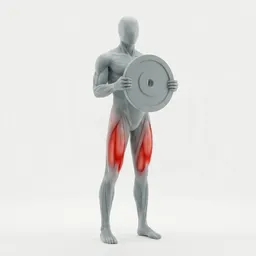

Track it in Gymaroo
Log your sets, see your last weight next to every set, and watch the Dumbbell Step-Up (Low) climb. Free on iPhone and Android.